Guide
After a loss or a breakup
Someone or something important is gone: a person who died, a relationship that ended, a job, a home or your health. Life around you carries on, and you are still taking in what has changed.

Draft Not yet reviewed by the psychologist · Sources
What therapy does
You grieve at your own pace, and look at what makes it harder, such as guilt or the sense that you should be over it by now, and practise meeting it with more warmth.
How to start
A free 25-minute conversation by video.
How grief can feel
Missing what is gone
You miss the person, or the life you had, and the feeling can come back without warning. You may feel sad, numb, angry or guilty, sometimes all on the same day. You feel tired and it is hard to concentrate on everyday things, while people around you seem to expect you to be over it sooner than you are.
You are not the only one
Grief can follow many kinds of loss: a death, the end of a relationship, the loss of a job or a home. In a Swedish survey of people who had lost someone close, more than half said the support they received was not enough. You do not need a diagnosis to talk about it.
Why grief can last
Two ways of understanding grief
Research finds that most people do not grieve in fixed stages. Many move back and forth: some days facing the loss, other days dealing with daily life or taking a break from the grief. Both are part of grieving.
Staying connected to the person who died, for example through memories, is common. Research is still working out when this bond comforts and when it makes grieving harder.
A breakup can bring grief too. In a large study of young unmarried adults, distress rose and life satisfaction fell after a breakup.
Losses that others do not always see can weigh heavily. Losing a job raises distress for many people. After a miscarriage, about one in six women in a London study still had symptoms of post-traumatic stress nine months later.
Both approaches see grief as a natural response to losing something that mattered.

Compassion Focused Therapy
Grief is seen as a time when the mind’s threat system is easily set off, for example by self-blame, while comfort and warmth, from others or from yourself, are harder to reach.

Internal Family Systems
Grief is seen as being felt by different sides of you: one that misses what is gone, and others that keep the pain at a distance or keep daily life going.
What can help
How therapy works with grief
Many people find their way through grief with support from those around them, and for many it becomes easier to carry over time. When it stays very heavy, or daily life is hard to manage, talking with a psychologist can help. Below are the two approaches we use.
In Compassion Focused Therapy, you look at how you treat yourself while you grieve, such as guilt or the sense that you should be over it by now, and practise meeting it with more warmth, with guided practices.
In Internal Family Systems, you get to know the sides of you that carry the loss, and the sides that try to protect you from it, at a pace that feels manageable.
How both approaches are used in a sessionNothing is forced. You can slow down or pause at any point.
Urgent help
When to seek urgent help
If you are in danger, or thinking about ending your life, call 112 (or your local emergency number) now, or go to the nearest emergency department.
findahelpline.com lists free helplines in every country.
Limits
Who this is not for
Your psychologist offers talking therapy by appointment. Some situations need other care first: a crisis, hearing or seeing things others do not, extreme mood swings, eating that affects physical health, alcohol or drug use that has become hard to stop, or a need for medication or a hospital stay. Your family doctor can refer you to the right specialist care.
If you are unsure, mention it in your request. The initial consultation is also there to check this together.
What we recommend
Books and tools to explore
To explore at your own pace, alongside therapy or before you start.
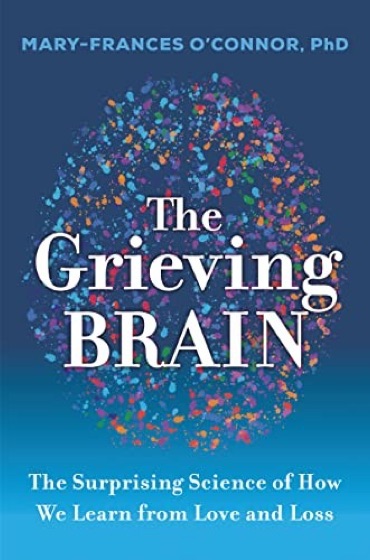 BookThe Grieving Brain
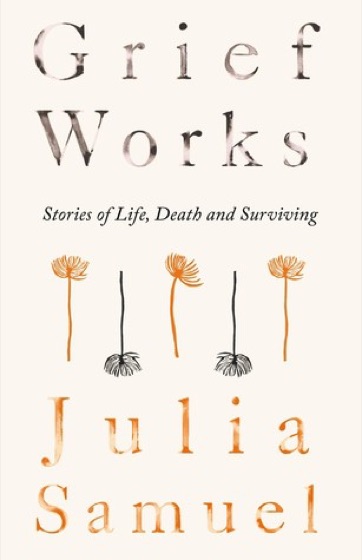 BookGrief Works
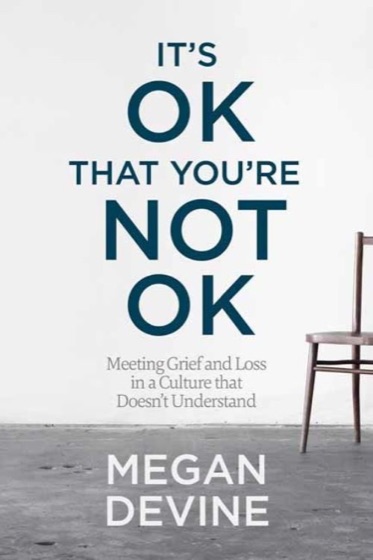 BookIt's OK That You're Not OK
 ExercisesGuided compassion practices
For people who are struggling after a loss, psychological therapy reduces grief, with modest effects. It helps most when it is one to one, and for people whose grief has stayed intense for six months or more. For people who are coping, grief support adds little in the long run, partly because grief often eases with time.
Studies estimate that about one in ten adults who lose someone close are at risk of prolonged grief: intense longing and pain that go on long after the loss and make daily life hard. The World Health Organization lists this as prolonged grief disorder, diagnosed only after more than six months and only when the grief clearly goes beyond what is usual in the person’s culture.
For the approaches we use, the evidence is early. In a randomised trial in Denmark, an eight-week group programme of Compassion Focused Therapy did not reduce prolonged grief more than a waiting list. In a study of people going through a divorce, those who were kinder towards themselves were less troubled by thoughts about the separation, up to nine months later. There is no research yet on Internal Family Systems for grief, and neither approach has been shown to work better than other therapies. What research does show, across every kind of therapy, is that how well you and your psychologist work together matters for the result.
General information, alongside an individual evaluation by a psychologist.
- NHS (2026). Grief after bereavement or loss.
- Eklund, R., Englund, A., Berglund, F., & Sveen, J. (2026). “Acknowledge my grief”: experiences and needs of bereavement support in Sweden following the death of a loved one. BMC Public Health, 26.
- Stroebe, M., Schut, H., & Boerner, K. (2017). Cautioning health-care professionals: bereaved persons are misguided through the stages of grief. Omega, 74(4).
- Stroebe, M., & Schut, H. (1999). The dual process model of coping with bereavement: rationale and description. Death Studies, 23(3).
- Stroebe, M., Schut, H., & Boerner, K. (2010). Continuing bonds in adaptation to bereavement: toward theoretical integration. Clinical Psychology Review, 30(2).
- Rhoades, G. K., Kamp Dush, C. M., Atkins, D. C., Stanley, S. M., & Markman, H. J. (2011). Breaking up is hard to do: the impact of unmarried relationship dissolution on mental health and life satisfaction. Journal of Family Psychology, 25(3).
- Paul, K. I., & Moser, K. (2009). Unemployment impairs mental health: meta-analyses. Journal of Vocational Behavior, 74(3).
- Farren, J., et al. (2020). Posttraumatic stress, anxiety and depression following miscarriage and ectopic pregnancy: a multicenter, prospective, cohort study. American Journal of Obstetrics and Gynecology, 222(4).
- Gilbert, P. (2009). Introducing compassion-focused therapy. Advances in Psychiatric Treatment, 15(3).
- Schwartz, R. C. (2013). Moving from acceptance toward transformation with Internal Family Systems therapy. Journal of Clinical Psychology, 69(8).
- Bonanno, G. A. (2004). Loss, trauma, and human resilience: have we underestimated the human capacity to thrive after extremely aversive events? American Psychologist, 59(1).
- Currier, J. M., Neimeyer, R. A., & Berman, J. S. (2008). The effectiveness of psychotherapeutic interventions for bereaved persons: a comprehensive quantitative review. Psychological Bulletin, 134(5).
- Johannsen, M., Damholdt, M. F., Zachariae, R., Lundorff, M., Farver-Vestergaard, I., & O’Connor, M. (2019). Psychological interventions for grief in adults: a systematic review and meta-analysis of randomized controlled trials. Journal of Affective Disorders, 253.
- Lundorff, M., Holmgren, H., Zachariae, R., Farver-Vestergaard, I., & O’Connor, M. (2017). Prevalence of prolonged grief disorder in adult bereavement: a systematic review and meta-analysis. Journal of Affective Disorders, 212.
- Killikelly, C., & Maercker, A. (2017). Prolonged grief disorder for ICD-11: the primacy of clinical utility and international applicability. European Journal of Psychotraumatology, 8(sup6).
- Johannsen, M., et al. (2022). Group-based compassion-focused therapy for prolonged grief symptoms in adults: results from a randomized controlled trial. Psychiatry Research, 314.
- Sbarra, D. A., Smith, H. L., & Mehl, M. R. (2012). When leaving your ex, love yourself: observational ratings of self-compassion predict the course of emotional recovery following marital separation. Psychological Science, 23(3).
- Flückiger, C., Del Re, A. C., Wampold, B. E., & Horvath, A. O. (2018). The alliance in adult psychotherapy: a meta-analytic synthesis. Psychotherapy, 55(4).
Not yet reviewed by the psychologist