Guide
Stressed and worn out
From the outside you keep everything going. Inside, you are running on empty, and rest does not seem to refill you.

Reviewed by Laurentiu Nicolae Costrut, psychologist (OPP 32887) · 2 November 2026 · Sources
What therapy does
You look at the pressure you put on yourself and what keeps you pushing, and practise ways to slow down and recover.
How to start
A free 25-minute conversation by video.
How exhaustion can feel
Running on empty
You feel tired all the time, even after rest. You feel overwhelmed, and it is hard to concentrate or decide. Work you used to care about can start to feel distant, or you become cynical about it. You snap more easily, and you may sleep or eat too much or too little.
You are not the only one
In an EU-wide survey of more than 27,000 workers, 46% said they face severe time pressure or too much work, and 37% said work had caused or worsened tiredness in the past year. You do not need a diagnosis to talk about it.
Why exhaustion can last
Two ways of understanding exhaustion
The World Health Organization describes burnout as the result of long-term work stress that has not been managed: exhaustion, distance from your work, and a sense of doing less well. It is not classed as a medical condition.
Research links it to a long-running mismatch between a person and their work, such as workload, control, reward and values. Both approaches look at what keeps you going at this pace, not only at the tiredness.

Compassion Focused Therapy
Exhaustion is seen as the systems for pressure and striving taking over, while the system for rest and feeling safe gets little room.

Internal Family Systems
Hard-working sides of you are seen as keeping everything together to prevent what they fear, often at the cost of rest.
What can help
How therapy works with exhaustion
Exhaustion often has to do with your circumstances as well as with you, and both can be looked at in sessions. Below are the two approaches we use.
In Compassion Focused Therapy, you look at the pressure you put on yourself and how you treat yourself when you fall short, and practise ways to slow down and recover.
In Internal Family Systems, you get to know the sides of you that keep pushing: what they fear would happen if they stopped, and what they need in order to rest.
How both approaches are used in a sessionNothing is forced. You can slow down or pause at any point.
Urgent help
When to seek urgent help
If you are in danger, or thinking about ending your life, call 112 (or your local emergency number) now, or go to the nearest emergency department.
findahelpline.com lists free helplines in every country.
Limits
Who this is not for
Your psychologist offers talking therapy by appointment. Some situations need other care first: a crisis, hearing or seeing things others do not, extreme mood swings, eating that affects physical health, alcohol or drug use that has become hard to stop, or a need for medication or a hospital stay. Your family doctor can refer you to the right specialist care.
If you are unsure, mention it in your request. The initial consultation is also there to check this together.
What we recommend
Books and tools to explore
To explore at your own pace, alongside therapy or before you start.
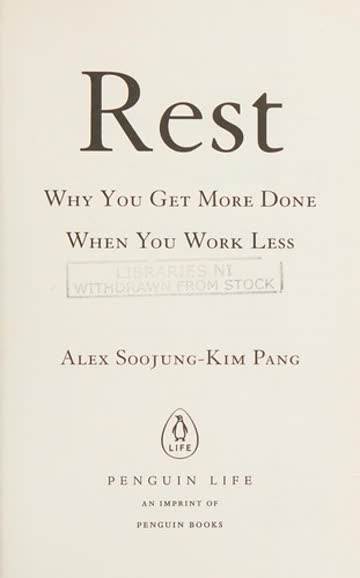
Explore the Burnout shelf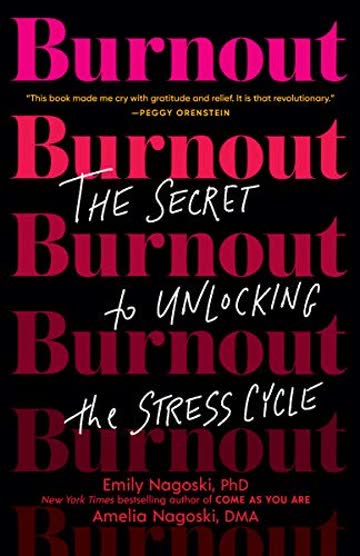

Research on treating burnout is limited for every kind of therapy: reviews find small or mixed effects, and no therapy is clearly the first choice. The most promising signs come from self-compassion training, which improved wellbeing at work in studies of medium quality with people in caring professions.
For the two approaches we use there is no direct research yet: no published trials of Compassion Focused Therapy for burnout, and no studies of Internal Family Systems. What research does show, across every kind of therapy, is that how well you and your psychologist work together matters for the result.
General information, alongside an individual evaluation by a psychologist.
- EU-OSHA (2022). OSH Pulse: occupational safety and health in post-pandemic workplaces. Flash Eurobarometer.
- World Health Organization (2019). Burn-out an “occupational phenomenon”: International Classification of Diseases.
- Maslach, C., & Leiter, M. P. (2016). Understanding the burnout experience: recent research and its implications for psychiatry. World Psychiatry, 15(2).
- Gilbert, P. (2009). Introducing compassion-focused therapy. Advances in Psychiatric Treatment, 15(3).
- Schwartz, R. C. (2013). Moving from acceptance toward transformation with Internal Family Systems therapy. Journal of Clinical Psychology, 69(8).
- Ahola, K., Toppinen-Tanner, S., & Seppänen, J. (2017). Interventions to alleviate burnout symptoms and to support return to work among employees with burnout: systematic review and meta-analysis. Burnout Research, 4.
- Dreison, K. C., et al. (2018). Job burnout in mental health providers: a meta-analysis of 35 years of intervention research. Journal of Occupational Health Psychology, 23(1).
- Kotera, Y., & Van Gordon, W. (2021). Effects of self-compassion training on work-related well-being: a systematic review. Frontiers in Psychology, 12.
- Flückiger, C., Del Re, A. C., Wampold, B. E., & Horvath, A. O. (2018). The alliance in adult psychotherapy: a meta-analytic synthesis. Psychotherapy, 55(4).
Reviewed by the psychologist on 2 November 2026