Guide
Can't stop worrying
Your mind keeps running through what could go wrong, and your body does not settle, even when nothing is happening. Many people know this kind of worry.

Reviewed by Laurentiu Nicolae Costrut, psychologist (OPP 32887) · 2 November 2026 · Sources
What therapy does
You find out what sets the worry off and how it shows up in your body, and practise ways to calm it, such as slow, steady breathing.
How to start
A free 25-minute conversation by video.
How worry can feel
Worry that is hard to stop
You worry about everyday things and find it hard to stop. You feel on edge or restless, and it is hard to relax. The worry shows in your body too: tight muscles, headaches, an upset stomach or a racing heart. Sleep becomes difficult, and you feel tired during the day.
You are not the only one
Around 470 million people worldwide had an anxiety disorder in 2023, about one in seventeen. It does not mean something is wrong with you, and you do not need a diagnosis to talk about it.
Why worry can last
Two ways of understanding the worry
Worry can feel like a way to stay prepared. Trying to control or avoid unpleasant feelings, for example by worrying, can keep the anxiety going.
Both approaches see the worry as something that can be understood, not only something to push away.

Compassion Focused Therapy
Anxiety is seen as the mind’s threat system staying switched on, while the system that helps you feel safe and calm gets little room. Self-criticism can keep the alarm going.

Internal Family Systems
The worry is seen as one side of you that is trying to keep you safe, often from something that once hurt.
What can help
How therapy works with anxiety
Several kinds of therapy help with anxiety, and cognitive behavioural therapy has the most research behind it. Below are the two we use.
In Compassion Focused Therapy, you notice what sets the alarm off and how it shows up in your body, and practise ways to calm it, such as slow, steady breathing and compassionate imagery.
In Internal Family Systems, you get to know the worried side of you: when it starts, what it is afraid of, and what it is trying to protect you from.
How both approaches are used in a sessionNothing is forced. You can slow down or pause at any point.
Urgent help
When to seek urgent help
If you are in danger, or thinking about ending your life, call 112 (or your local emergency number) now, or go to the nearest emergency department.
findahelpline.com lists free helplines in every country.
Limits
Who this is not for
Your psychologist offers talking therapy by appointment. Some situations need other care first: a crisis, hearing or seeing things others do not, extreme mood swings, eating that affects physical health, alcohol or drug use that has become hard to stop, or a need for medication or a hospital stay. Your family doctor can refer you to the right specialist care.
If you are unsure, mention it in your request. The initial consultation is also there to check this together.
What we recommend
Books and tools to explore
To explore at your own pace, alongside therapy or before you start.
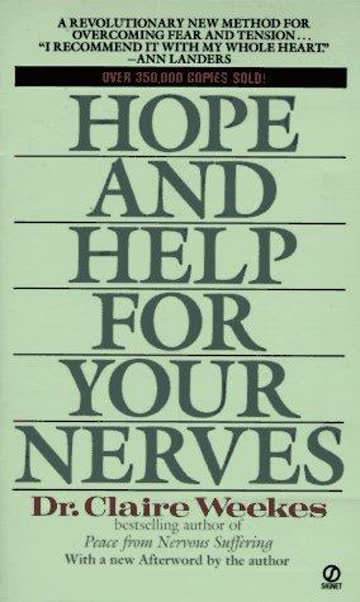
Explore the Anxiety shelf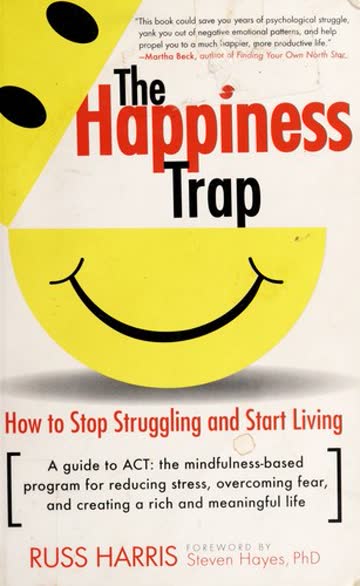

For ongoing worry, cognitive behavioural therapy has the strongest evidence, and a large review found that psychological therapy helps clearly. Compassion-based therapies have also reduced anxiety in reviews of small trials, although they did not clearly do better than other active treatments.
For the two approaches we use, the research is still thin: there is no review yet of Compassion Focused Therapy for generalised anxiety specifically, and no controlled research yet on Internal Family Systems for anxiety. What research does show, across every kind of therapy, is that how well you and your psychologist work together matters for the result.
General information, alongside an individual evaluation by a psychologist.
- World Health Organization (2026). Anxiety disorders, fact sheet.
- Behar, E., DiMarco, I. D., Hekler, E. B., Mohlman, J., & Staples, A. M. (2009). Current theoretical models of generalized anxiety disorder. Journal of Anxiety Disorders, 23(8).
- Newman, M. G., & Llera, S. J. (2011). A novel theory of experiential avoidance in generalized anxiety disorder: the contrast avoidance model of worry. Clinical Psychology Review, 31(3).
- Gilbert, P. (2009). Introducing compassion-focused therapy. Advances in Psychiatric Treatment, 15(3).
- Schwartz, R. C. (2013). Moving from acceptance toward transformation with Internal Family Systems therapy. Journal of Clinical Psychology, 69(8).
- NICE (2011, updated 2020). Generalised anxiety disorder and panic disorder in adults: management (CG113).
- Cuijpers, P., Sijbrandij, M., Koole, S., Huibers, M., Berking, M., & Andersson, G. (2014). Psychological treatment of generalized anxiety disorder: a meta-analysis. Clinical Psychology Review, 34(2).
- Kirby, J. N., Tellegen, C. L., & Steindl, S. R. (2017). A meta-analysis of compassion-based interventions: current state of knowledge and future directions. Behavior Therapy, 48(6).
- Wilson, A. C., Mackintosh, K., Power, K., & Chan, S. W. Y. (2019). Effectiveness of self-compassion related therapies: a systematic review and meta-analysis. Mindfulness, 10.
- Flückiger, C., Del Re, A. C., Wampold, B. E., & Horvath, A. O. (2018). The alliance in adult psychotherapy: a meta-analytic synthesis. Psychotherapy, 55(4).
Reviewed by the psychologist on 2 November 2026