Guide
Nothing ever feels good enough
You replay what you said, notice every mistake, and rest feels like something you have to earn. Many people know an inner voice like this.

Reviewed by Laurentiu Nicolae Costrut, psychologist (OPP 32887) · 2 November 2026 · Sources
What therapy does
You look at where the critical voice comes from and what it is trying to do for you, and build a kinder way of speaking to yourself.
How to start
A free 25-minute conversation by video.
How self-criticism can feel
An inner voice that rarely lets up
You replay conversations and find fault with what you said, and you notice what went wrong faster than what went well. Praise is hard to take in, while criticism stays with you. Rest, or kindness towards yourself, can feel like something you first have to earn.
You are not the only one
Self-criticism comes up in many of the difficulties people bring to therapy, such as low mood and anxiety. It does not mean something is wrong with you, and you do not need a diagnosis to talk about it.
Why self-criticism can last
Two ways of understanding the critic
A strong inner critic can make change harder, whichever therapy people have. That is one reason some approaches work with the critic directly.
Both approaches see the harsh voice as something that can be understood, not only something to silence.

Compassion Focused Therapy
Self-criticism is seen as linked to the mind’s threat system: a way of trying to stay safe from failure or rejection that keeps you on alert and leaves little room to feel calm.

Internal Family Systems
The critic is seen as one side of you that is trying to protect you, often in a way that once made sense.
What can help
How therapy works with the critic
Several kinds of therapy work with self-criticism, including cognitive behavioural approaches. Below are the two we use.
In Compassion Focused Therapy, you look at how you treat yourself when things are hard, and build a kinder inner voice, with guided practices to calm the mind.
In Internal Family Systems, you get to know the critic as one side of you: when it speaks up, what it is afraid of, and what it is trying to do for you.
How both approaches are used in a sessionNothing is forced. You can slow down or pause at any point.
Urgent help
When to seek urgent help
If you are in danger, or thinking about ending your life, call 112 (or your local emergency number) now, or go to the nearest emergency department.
findahelpline.com lists free helplines in every country.
Limits
Who this is not for
Your psychologist offers talking therapy by appointment. Some situations need other care first: a crisis, hearing or seeing things others do not, extreme mood swings, eating that affects physical health, alcohol or drug use that has become hard to stop, or a need for medication or a hospital stay. Your family doctor can refer you to the right specialist care.
If you are unsure, mention it in your request. The initial consultation is also there to check this together.
What we recommend
Books and tools to explore
To explore at your own pace, alongside therapy or before you start.
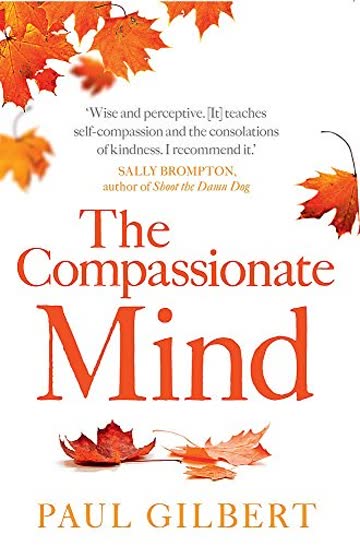 BookThe Compassionate Mind
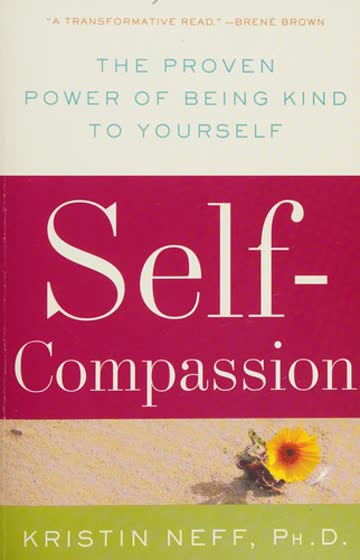 BookSelf-Compassion
 ExercisesSelf-compassion practices
 ExercisesGuided compassion practices
Compassion Focused Therapy, one of the two approaches we use, has been studied in many randomised trials. Reviews find it can reduce self-criticism and low mood, although the studies vary in quality and more long-term research is still needed. Research on Internal Family Systems, the other approach, is earlier: small studies suggest it may help, and the first randomised trial, for trauma, found it helped about as much as another active group programme. Some of these studies were run or funded by people connected with IFS, so larger independent trials are needed.
Neither approach has yet been shown to work better than other established therapies, and for anxiety and low mood in general, cognitive behavioural therapy has more research behind it. What research does show, across every kind of therapy, is that how well you and your psychologist work together matters for the result.
General information, alongside an individual evaluation by a psychologist.
- Werner, A. M., Tibubos, A. N., Rohrmann, S., & Reiss, N. (2019). The clinical trait self-criticism and its relation to psychopathology: a systematic review – update. Journal of Affective Disorders, 246.
- Löw, C. A., Schauenburg, H., & Dinger, U. (2020). Self-criticism and psychotherapy outcome: a systematic review and meta-analysis. Clinical Psychology Review, 75.
- Gilbert, P. (2009). Introducing compassion-focused therapy. Advances in Psychiatric Treatment, 15(3).
- Schwartz, R. C. (2013). Moving from acceptance toward transformation with Internal Family Systems therapy. Journal of Clinical Psychology, 69(8).
- Millard, L. A., et al. (2023). The effectiveness of compassion focused therapy with clinical populations: a systematic review and meta-analysis. Journal of Affective Disorders.
- Petrocchi, N., Ottaviani, C., et al. (2023). The impact of compassion-focused therapy on positive and negative mental health outcomes: results of a series of meta-analyses. Clinical Psychology: Science and Practice.
- Shadick, N. A., et al. (2013). A randomized controlled trial of an Internal Family Systems-based psychotherapeutic intervention on outcomes in rheumatoid arthritis. Journal of Rheumatology.
- Joss, D., et al. (2026). Randomized controlled trial of online group-based Internal Family Systems treatment for PTSD. Psychological Trauma: Theory, Research, Practice, and Policy.
- NICE (2011, updated 2020). Generalised anxiety disorder and panic disorder in adults: management (CG113).
- NICE (2022). Depression in adults: treatment and management (NG222).
- Flückiger, C., Del Re, A. C., Wampold, B. E., & Horvath, A. O. (2018). The alliance in adult psychotherapy: a meta-analytic synthesis. Psychotherapy, 55(4).
Reviewed by the psychologist on 2 November 2026