Guide
Low, and not quite yourself
Things that used to matter feel flat, and even small tasks take effort. It can go on for weeks, and it is more common than many people think.

Reviewed by Laurentiu Nicolae Costrut, psychologist (OPP 32887) · 2 November 2026 · Sources
What therapy does
You look at what is weighing on you and how you speak to yourself when you feel low, and build a steadier, warmer inner voice.
How to start
A free 25-minute conversation by video.
How low mood can feel
A low that does not lift
Your mood stays low or empty and does not lift for long. Things you used to enjoy hold little interest, you have little energy, and small tasks take a lot of effort. You may pull back from people, and decisions feel hard.
You are not the only one
About 322 million adults worldwide live with depression. Across the EU, 7.2% of people reported long-lasting depression in 2019. You do not need a diagnosis to talk about how you feel.
Why low mood can last
Two ways of understanding low mood
Going over problems and feelings again and again, known as rumination, can keep low mood going and deepen it.
Both approaches see low mood as something that can be understood, not something to be ashamed of.

Compassion Focused Therapy
Harsh self-criticism and shame are seen as keeping the threat system active, so a sense of calm and warmth is hard to reach.

Internal Family Systems
Low mood is seen as sides of you that carry old pain, with other sides keeping that pain out of sight.
What can help
How therapy works with low mood
Several kinds of therapy help with depression, and cognitive behavioural therapy has the most research behind it. Below are the two we use.
In Compassion Focused Therapy, you look at how you speak to yourself when you feel low, and build a warmer, steadier inner voice, with guided practices.
In Internal Family Systems, you get to know the sides of you that carry the heaviness, and the sides that try to keep it away, at a pace that feels manageable.
How both approaches are used in a sessionNothing is forced. You can slow down or pause at any point.
Urgent help
When to seek urgent help
If you are in danger, or thinking about ending your life, call 112 (or your local emergency number) now, or go to the nearest emergency department.
findahelpline.com lists free helplines in every country.
Limits
Who this is not for
Your psychologist offers talking therapy by appointment. Some situations need other care first: a crisis, hearing or seeing things others do not, extreme mood swings, eating that affects physical health, alcohol or drug use that has become hard to stop, or a need for medication or a hospital stay. Your family doctor can refer you to the right specialist care.
If you are unsure, mention it in your request. The initial consultation is also there to check this together.
What we recommend
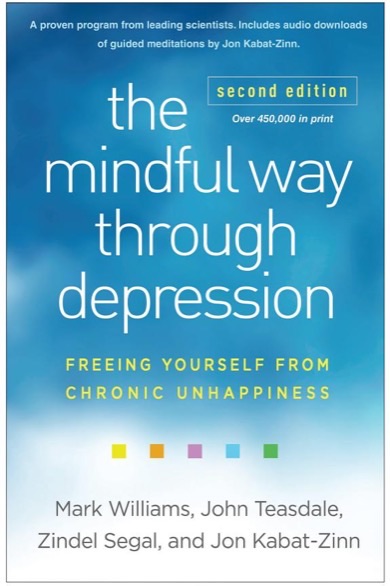
Books and tools to explore
To explore at your own pace, alongside therapy or before you start.
Explore the Low mood shelf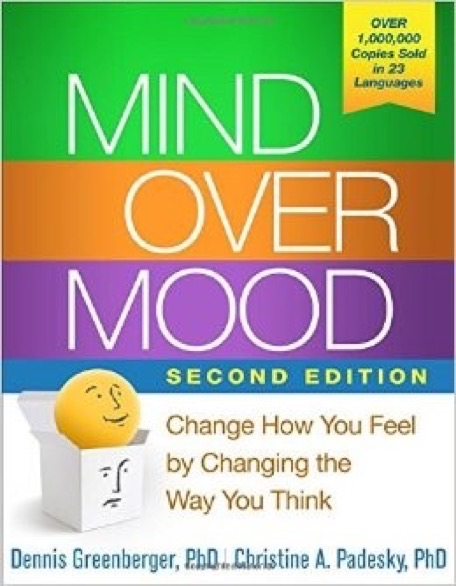

For depression, cognitive behavioural therapy has the most research behind it, although in the largest review it did only slightly better than other established therapies. Compassion Focused Therapy, one of the approaches we use, has also reduced low mood in reviews of randomised trials, with small to medium effects. The studies vary in quality, and more research is needed.
For Internal Family Systems there is so far one small randomised pilot study, in which depression fell about as much as with the comparison therapies, so this is early evidence only. What research does show, across every kind of therapy, is that how well you and your psychologist work together matters for the result.
General information, alongside an individual evaluation by a psychologist.
- World Health Organization (2026). Depression, fact sheet.
- Eurostat (2021). 7.2% of people in the EU suffer from chronic depression.
- Nolen-Hoeksema, S., Wisco, B. E., & Lyubomirsky, S. (2008). Rethinking rumination. Perspectives on Psychological Science, 3(5).
- Gilbert, P. (2009). Introducing compassion-focused therapy. Advances in Psychiatric Treatment, 15(3).
- Schwartz, R. C. (2013). Moving from acceptance toward transformation with Internal Family Systems therapy. Journal of Clinical Psychology, 69(8).
- NICE (2022). Depression in adults: treatment and management (NG222).
- Cuijpers, P., et al. (2023). Cognitive behavior therapy vs. control conditions, other psychotherapies, pharmacotherapies and combined treatment for depression: a comprehensive meta-analysis. World Psychiatry, 22(1).
- Millard, L. A., et al. (2023). The effectiveness of compassion focused therapy with clinical populations: a systematic review and meta-analysis. Journal of Affective Disorders.
- Petrocchi, N., Ottaviani, C., et al. (2023). The impact of compassion-focused therapy on positive and negative mental health outcomes: results of a series of meta-analyses. Clinical Psychology: Science and Practice.
- Haddock, S. A., Weiler, L. M., Trump, L. J., & Henry, K. L. (2017). The efficacy of Internal Family Systems therapy in the treatment of depression among female college students: a pilot study. Journal of Marital and Family Therapy, 43(1).
- Flückiger, C., Del Re, A. C., Wampold, B. E., & Horvath, A. O. (2018). The alliance in adult psychotherapy: a meta-analytic synthesis. Psychotherapy, 55(4).
Reviewed by the psychologist on 2 November 2026